
Market signals, buyer behavior, and implications for merchants
Explore the guide below or get the PDF straight to your inbox →
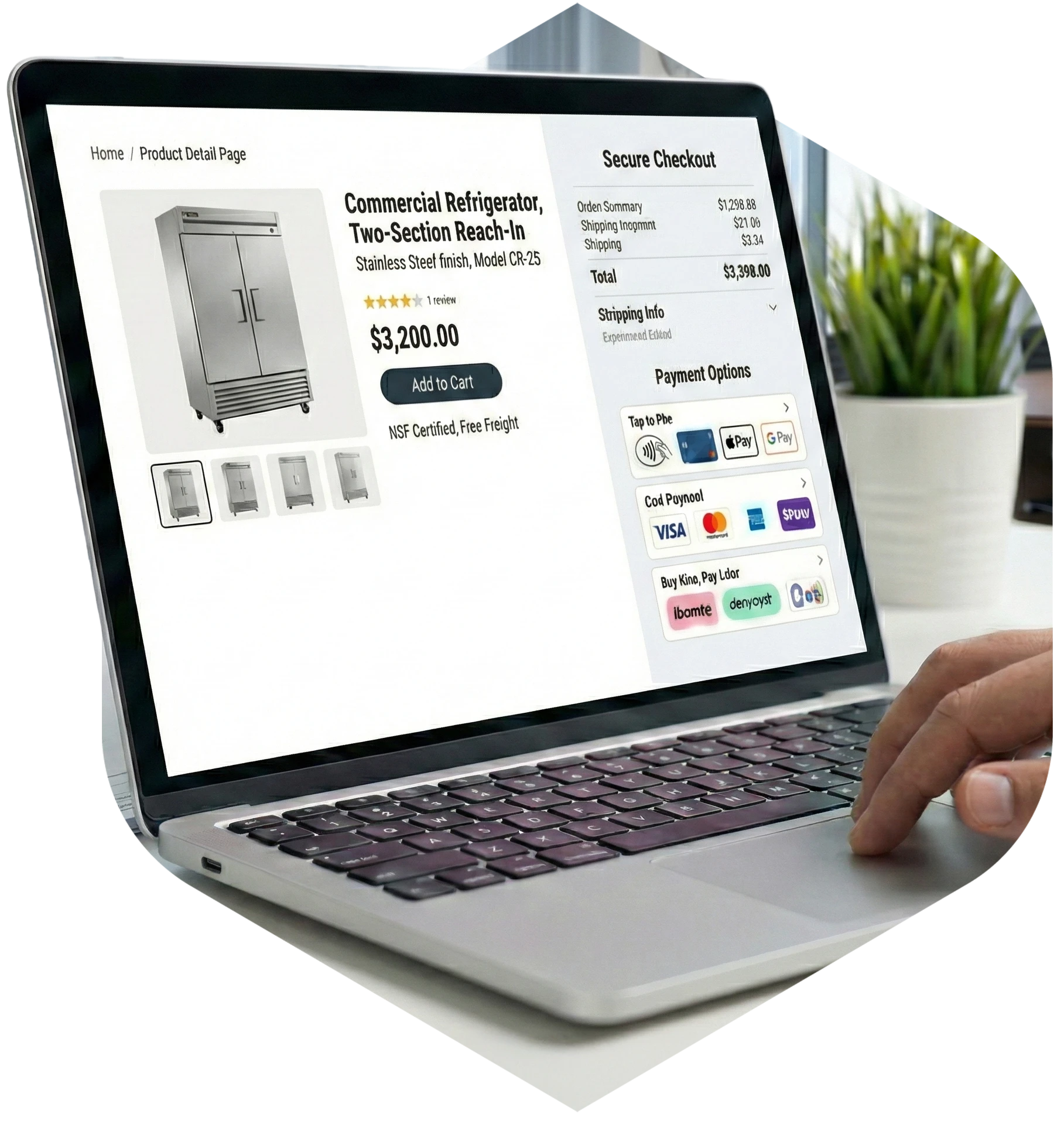
This report analyzes U.S. B2B buyer behavior from 2024 through early 2026 to surface insights into growing demand for flexible payment terms, and how payment timing influences purchasing decisions.
From 2024 through early 2026 there has been a clear shift in how U.S. B2B buyers evaluate payment terms. Flexible payment options are increasingly viewed as a standard part of the purchasing experience rather than an exception. Across all industries, research shows that payment timing now influences purchase completion, order size, and supplier selection.
The demand for flexible payment terms is driven primarily by cash flow management, not short-term financial distress. Buyers report increased pressure to preserve liquidity, align payment timing with revenue, and reduce internal friction in procurement.
As a result, embedded payment options available at the point of purchase are gaining importance relative to traditional invoicing and credit approvals. Research shows that 91% of U.S. business decision-makers agree that easy, streamlined, and secure payments drive business growth, indicating that payment experience is a high‑priority factor in B2B purchasing decisions.1
These findings suggest that flexible payment terms are becoming a foundational element of modern B2B commerce, with direct implications for merchant cash flow visibility, operational efficiency, and buyer retention.
B2B buyer expectations around payment terms have shifted materially since 2024, driven in part by changing buyer demographics and purchasing channels. As Millennial and Generation Z buyers increase their market dominance, Forrester research predicts that more than half of all large B2B transactions will be processed through self-serve channels, including vendor websites and online marketplaces.2
These younger buyers bring consumer-grade expectations into B2B purchasing. 85% of Gen Z and 82% of Millennials3 prefer contactless digital payments over traditional methods, which is accelerating the decline of paper checks, manual invoicing, and slow approval workflows in favor of virtual and automated payment solutions.
As purchasing shifts toward digital and self-serve environments, buyers increasingly expect payment flexibility to be available during the purchasing process, not negotiated after a supplier is selected.
This expectation is especially pronounced in industries where purchasing is time-sensitive and recurring. In these environments, payment timing directly influences whether orders proceed immediately, are reduced in size, or are deferred altogether. Buyers now evaluate payment options alongside price, availability, and fulfillment reliability when selecting suppliers.
The demand for simpler payment experiences is not theoretical. Even though a majority of business leaders agree that streamlining payments leads to increased growth, the implementation of flexible payment terms is lagging behind. Only 17% of leaders4 reported full automation of their payments processes, highlighting a gap between buyer expectations and supplier capabilities.
Research shows sustained pressure on SMB cash flow. 56% of U.S. firms cited operating expenses as a financial challenge and 51% reported uneven cash flow over the past year, reflecting higher costs and variable demand cycles.5
In response, SMB finance teams are placing greater emphasis on payment timing as a lever for working capital control. Internal purchasing processes have become more structured, with finance leaders involved earlier in the buying cycle, particularly for repeat or higher-value purchases. Buyers are expected to move quickly, but only when payment terms align with internal cash flow policies.
Federal Reserve data reinforces the operational impact of payment timing on buying behavior. In a 2025 survey, 45% of firms reported modifying purchase timing due to cash constraints, while 40% noted that predictable payment terms would enable larger or more frequent orders.6
When payment flexibility is unclear or unavailable at checkout, purchases are more likely to be delayed, downsized, or redirected to competing suppliers. These patterns highlight how payment terms have moved from a back-office consideration to a core determinant of purchase completion and supplier selection.
Data indicates that growing demand for flexible payment terms is not primarily associated with short-term financial distress. Instead, buyers cite internal requirements to preserve liquidity and maintain predictable operating expenses. 29% of B2B buyers said that they’ve walked away from an online purchase due to a lack of flexible payment options.7
Ineffective cash flow management remains a core operational issue for U.S. small businesses, and underpins why payment timing matters. With finance teams under pressure to control cash outflows and align payments more closely with incoming revenue, many smaller businesses actively manage payment timing even when access to credit is available.
In this context, modern payment tools function as a cash management mechanism. Buyers are not seeking to avoid payment obligations, but to structure them in ways that better reflect their operational realities.
As buyer expectations around payment timing have changed, so has the measurable impact of payment terms on purchasing behavior. When payment options align with buyer cash cycles, purchasing becomes faster and more consistent.
Across industries, flexible payment terms influence three core behaviors.
When buyers can choose payment timing that fits their cash position, they are more likely to complete transactions without delay. Research across B2B payments indicates that unclear or rigid payment terms are a common reason purchases stall during the buying process, even after a supplier has been selected. Flexible terms reduce this last-mile friction.
Payment timing directly affects how much buyers are willing to commit in a single transaction. When buyers are required to pay immediately or rely on limited credit options, they often reduce quantities to manage near-term cash outflows. Flexible payment terms allow buyers to purchase what they actually need, rather than what they can afford that week.
Predictable payment schedules support repeat purchasing. Buyers who know they can reliably access flexible terms are less likely to postpone reorders or consolidate purchases. Over time, this leads to steadier purchasing patterns and fewer sharp swings in order volume.
Traditional B2B payment methods such as invoicing, credit cards, and traditional financing solutions were designed for slower, relationship-driven buying environments. While these methods remain widely used, they are often aligned with merchant processes rather than the day-to-day reality of buyer cash cycles.
As purchasing moves toward digital, repeat, and self-directed workflows, these payment methods increasingly fall short of what modern buyers and merchants need. Each option introduces tradeoffs that can increase operational complexity or create misalignment between purchasing and payment timing.
While effective for smaller purchases, cards often fall short for recurring and high-value orders.
For buyers, invoicing can feel opaque and slow. For merchants, manual invoicing adds accounts receivable complexity and reduces predictability around cash collection, particularly as order volume increases. For 86% of businesses, up to 30% of their monthly invoiced sales are overdue. This highlights the operational and cash flow impact of delayed payments.
For buyers, invoicing can feel opaque and slow. For merchants, manual invoicing addsaccounts receivable complexity and reduces predictability around cash collection,particularly as order volume increases. For 86% of businesses, up to 30% of their monthly invoiced sales are overdue.8 This highlights the operational and cash flowimpact of delayed payments.
When buyers encounter these limitations, merchants often absorb the resulting friction. Purchases may be delayed, order sizes reduced, or transactions redirected to suppliers with more flexible payment systems. Internally, sales and finance teams may spend additional time managing payment exceptions, reconciling payments, or supporting stalled transactions.
These challenges reflect a growing mismatch between modern B2B purchasing workflows and traditional payment tools.
Industry research indicates increased adoption of embedded payment options within B2B checkout and ordering workflows. Rather than relying on post-sale negotiation or manual credit approval, buyers increasingly expect payment options to be visible and selectable at the point of purchase. Digital integration of tools such as BNPL and virtual cards are creating real-time visibility, faster cash flow and more secure transactions9 for both buyers and suppliers.
Embedded payment models are typically characterized by real-time eligibility assessment, defined repayment schedules, and predictable settlement for merchants. These models align with broader trends in digital commerce where transactions are completed with less manual administration, and a greater emphasis on speed and standardization.
For merchants, modern buyer shifts have direct operational and financial implications. Research shows that payment flexibility can influence order completion rates, purchasing frequency, and average order size, particularly where buyers actively manage cash timing.
At the same time, merchants remain challenged by settlement predictability, receivables exposure, and administrative overhead. 37% of sales professionals said that a top revenue growth issue was being slow to recognize and adapt to buying behaviors.10
PYMNTS research11 shows that a majority of firms still rely on manual accounts payable workflows, underscoring the operational drag legacy that legacy systems impose.
The growing emphasis on checkout-level payment options reflects a broader need to balance buyer flexibility with merchant control. Approaches that reduce reliance on manual credit decisions and heavy AR management are increasingly favored as economic challenges grow and transaction volumes scale.
Flexible payment terms will continue to play an increasing role in B2B commerce through 2026. Buyer surveys and market analyses show that payment options such as B2B BNPL are increasingly influencing supplier selection, particularly as purchasing becomes more digital and time-sensitive.
While adoption currently varies by industry, the overall direction is consistent. Payment flexibility is moving closer to mass adoption in B2B, with emphasis on transparency, defined repayment structures, and predictable settlement dates.
As a result, embedded B2B finance is increasingly being treated as core infrastructure rather than a convenience feature12. Solutions that integrate payment flexibility into checkout and ordering workflows offer greater buyer satisfaction, and allow merchants to offer buyers more control over payment timing while maintaining visibility into cash flow and operations.


